A Lamentation of Swans

Flock. Herd. Bevy.
My partner had called out to me,
"Come see this!"
Not prone to drama, there was a wonder in his call. A chance at hope? I could hear in his voice that it would not be more flames and smoke. Less than 24 hours had passed since reality had been suspended by wildfire in our community. My reticular alarm triggered, ready at the sign of renewed danger, I dropped what I was doing and went to see.
A group of 30 plus Trumpeter Swans drifted in the water just beyond the shoreline, a palpable grief in their stillness. Never had we seen so many swans gathered, and never off our dock, a mile from the fire. We had only ever witnessed two or three swans at a time while paddling in the reed high bays just off the Wendigo area. Mercifully, that day, the water off our shoreline was calm in the bay and the smoke drifted far enough above to allow sanctuary to the birds.
We stayed behind the glass of the window, more out of respect for the elegant beings than to avoid the rancour of smoke threatening in the tops of the trees. We watched them. Some had tucked their heads under their wings, drifting upon the surface. Others slipped their heads in and out of the water, their long necks a rhythmic movement that normally might have been calming. A few others paced around the group. Each of the swans behaving in their own unique way. I was curious.
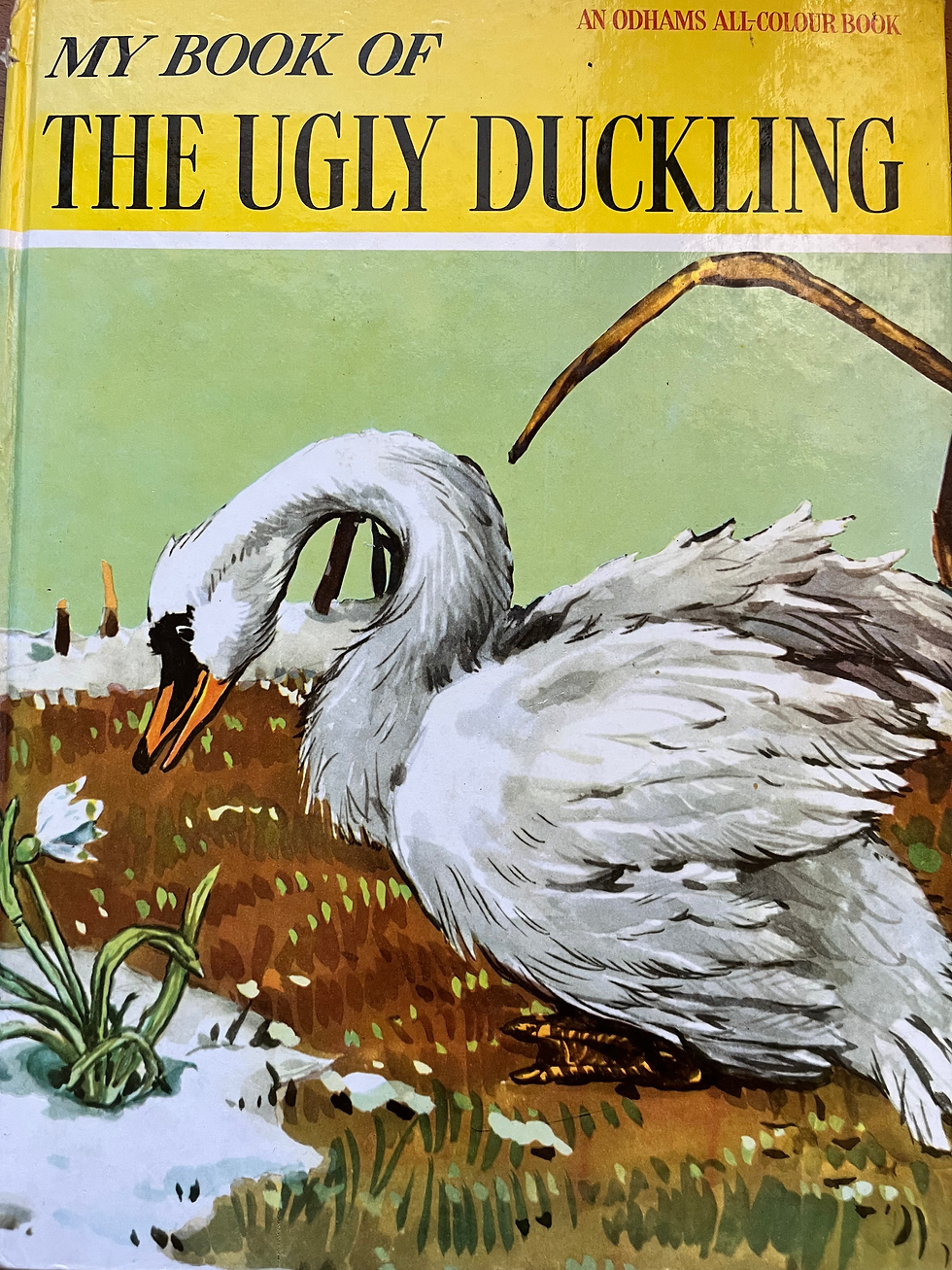
I googled, "What do you call a group of swans?" While AI pulled up a list of information, my memory pulled up images. Sitting at a wooden desk in my Grade Four classroom, I scanned through books, learning the specific terms for groups of animals. Then, I remembered the overlarge, early reader from my childhood: Odhams Publishing version of The Ugly Duckling, a classic tale of mistaken identity and the hardship one endures until self-actualization. The illustrations had frightened me, the contrast of blacks and whites, the vivid drawings of evil and good, and the seeminly unending sorrow until the very end when the duckling discovers he is a swan.
I read through the Google search. I had not remembered that there were so many terms for a group of swans. It seems swans have inspired people for eons to attribute human qualities to them. Influenced by their beauty and elegance, our words create a looking glass into our own identities.
A Bank of Swans.
A Ballet.
An Eyrie.
A Regatta.
A Squadron.
A Tranquility.
A friend who had once lived in the Wendigo area, years before, had imagined that after each of her parents died, a new swan showed up in the tiny bay of cattails and calm waters just by her cabin. It was a beautiful sentiment. A reminiscence of swans? A comfort of swans? I wondered if a swan arrived in her bay after her own death. I continued through the list of terms, a willfully seized opportunity at distraction. Then I saw it.
A Lamentation of Swans.
I looked again at the group on the water. A lamentation of swans harkens from medieval times, a description for a group of swans mourning loss. It was perfect.
Thirty-two of them in the bay. An evacuation of sorts. I wondered what they left behind. Members of their troupe? A nest of unborn children or their young? Their homes? Their sense of security? Sense of reality?
My partner and I rationalized that they had fled their predator, wildfire. But to have gathered like that, to have collectively chosen to evacuate? There was a reverence, to think that swans, who do not normally live together in large groups, found a way to unite. How did they do this? How did they decide where to go? How long did they stay together? And how did each of them react to the disturbance and trauma in thir lives?
As we stood there, trying to make sense of it all, I wondered,
"Is this not like us?"
We choose to live in our own units, separate from each other. At times of difficulty we gather, a harbour of safety. Are we not also a lamentation of swans, guided by strength, our own reactions varied?
In the year that has passed since the wildfires ravaged our area and our lives, our lamentation continues to unfold. Our grief and sorrow, our strength and courage continues to be revealed. In our passage, we are the Bank, Squadron, and Tranquility of Swans... fierce defenders, loving friends and community. As we remember, we can hold up a mirror to who we are, how we grieve and the unyielding strength in each of us, not just to persevere, but to thrive. A lamentation leading to renewal.
, herd, bevy.
I wasn’t sure how to describe the group of 30 plus Trumpeter Swans drifting in the water just beyond the shoreline, a palpable grief in their stillness. My partner had called out to me,
“Come see this!”
Not prone to drama, there was an awe in his call. A chance at hope? I could hear in his voice that it would not be more flames and smoke. Less than 24 hours had passed since reality had been suspended by wildfire in our community. My reticular alarm triggered, ready at the sign of renewed danger, I dropped what I was doing and went to see.
We have only ever witnessed two or three swans at a time, paddling in the reed high bays just off the Wendigo area. It is the only place I had seen them here in Lac du Bonnet. Never before had we seen so many swans gathered, and never off our dock, a mile from the fire. Mercifully, the water was calm in the bay and the smoke drifted far enough above to allow a sanctuary to the birds.
We stayed behind the glass of the window, more out of respect for the elegant beings than to avoid the rancour of smoke threatening in the tops of the trees. We watched them. Some had tucked their heads under their wings, drifting upon the surface. Others slipped their heads in and out of the water, their long necks a rhythmic movement that normally might have been calming. A few others paced around the group. Each of the swans behaving in their own unique way. I was curious.
I googled, “What do you call a group of swans?” While AI pulled up a list of information, my memory pulled up an image, me sitting at a wooden desk in my Grade Four classroom, scanning through books, learning the specific terms for groups of animals. Then, I remembered the overlarge, early reader from my childhood: Odhams Publishing version of The Ugly Duckling, the classic tale of mistaken identity and the hardship one endures until self-actualization. The illustrations had frightened me, the contrast of blacks and whites, the vivid drawings of evil and good, and the seemingly unending sorrow until the very end when the duckling discovers he is a swan.
I scanned through the Google search. I had not remembered that there were so many terms for a group of swans. It seems swans have inspired people to attribute human qualities to them for eons. Influenced by their beauty and elegance, our words create a looking glass into our own identities.
A Bank of Swans.
A Ballet.
An Eyrie.
A Regatta.
A Squadron.
A Tranquility.
A friend who had once lived in the Wendigo area years before had imagined that after each of her parents died, a new swan showed up in the tiny bay of cattails and calm waters just by her cabin. It was a beautiful sentiment. A reminiscence of swans? A comfort of swans? I read through the extensive lists for more terms, a willfully seized opportunity at distraction. Then I saw it.
A Lamentation of Swans.
I looked again at the group on the water. This was exactly the right classification. A lamentation of swans is a medieval term for a group of swans mourning loss. 32 of them in the bay. An evacuation of sorts. And I wondered what they left behind: members of their troupe, a nest of unborn children or young? Their homes? Their sense of security… sense of reality?
My partner and I rationalized that they had fled: their predator, wildfire. But to have gathered like that, to have collectively chosen to evacuate. It was awe-inspiring to think that swans, who do not normally live together in large groups, found a way to unite. How did they do this? Did a call go out? How did they decide where they’d go? How long did they stay together? And how did each of them react to the disturbance and trauma in their lives?
As we stood there, trying to make sense of it all, I wondered,
“Is this not like us?”
We choose to live in our own units, separate from each other. At times of difficulty we gather together, a harbour of safety. Are we not also a lamentation of swans, guided by strength, our own reactions varied.
In the year that has passed since the wildfires ravaged our region and our lives, our lamentation continues to unfold. Our grief and sorrow, our strength and courage continues to be revealed. In our passage, we are the Bank, Squadron, and Tranquility of Swans… fierce defenders, loving friends and community. As we remember, we can hold up a mirror to who we are, how we grieve and the unyielding strength in each of us, not just to persevere, but to thrive. A lamentation leading to renewal.Flock, herd, bevy.
I wasn’t sure how to describe the group of 30 plus Trumpeter Swans drifting in the water just beyond the shoreline, a palpable grief in their stillness. My partner had called out to me,
“Come see this!”
Not prone to drama, there was an awe in his call. A chance at hope? I could hear in his voice that it would not be more flames and smoke. Less than 24 hours had passed since reality had been suspended by wildfire in our community. My reticular alarm triggered, ready at the sign of renewed danger, I dropped what I was doing and went to see.
We have only ever witnessed two or three swans at a time, paddling in the reed high bays just off the Wendigo area. It is the only place I had seen them here in Lac du Bonnet. Never before had we seen so many swans gathered, and never off our dock, a mile from the fire. Mercifully, the water was calm in the bay and the smoke drifted far enough above to allow a sanctuary to the birds.
We stayed behind the glass of the window, more out of respect for the elegant beings than to avoid the rancour of smoke threatening in the tops of the trees. We watched them. Some had tucked their heads under their wings, drifting upon the surface. Others slipped their heads in and out of the water, their long necks a rhythmic movement that normally might have been calming. A few others paced around the group. Each of the swans behaving in their own unique way. I was curious.
I googled, “What do you call a group of swans?” While AI pulled up a list of information, my memory pulled up an image, me sitting at a wooden desk in my Grade Four classroom, scanning through books, learning the specific terms for groups of animals. Then, I remembered the overlarge, early reader from my childhood: Odhams Publishing version of The Ugly Duckling, the classic tale of mistaken identity and the hardship one endures until self-actualization. The illustrations had frightened me, the contrast of blacks and whites, the vivid drawings of evil and good, and the seemingly unending sorrow until the very end when the duckling discovers he is a swan.
I scanned through the Google search. I had not remembered that there were so many terms for a group of swans. It seems swans have inspired people to attribute human qualities to them for eons. Influenced by their beauty and elegance, our words create a looking glass into our own identities.
A Bank of Swans.
A Ballet.
An Eyrie.
A Regatta.
A Squadron.
A Tranquility.
A friend who had once lived in the Wendigo area years before had imagined that after each of her parents died, a new swan showed up in the tiny bay of cattails and calm waters just by her cabin. It was a beautiful sentiment. A reminiscence of swans? A comfort of swans? I read through the extensive lists for more terms, a willfully seized opportunity at distraction. Then I saw it.
A Lamentation of Swans.
I looked again at the group on the water. This was exactly the right classification. A lamentation of swans is a medieval term for a group of swans mourning loss. 32 of them in the bay. An evacuation of sorts. And I wondered what they left behind: members of their troupe, a nest of unborn children or young? Their homes? Their sense of security… sense of reality?
My partner and I rationalized that they had fled: their predator, wildfire. But to have gathered like that, to have collectively chosen to evacuate. It was awe-inspiring to think that swans, who do not normally live together in large groups, found a way to unite. How did they do this? Did a call go out? How did they decide where they’d go? How long did they stay together? And how did each of them react to the disturbance and trauma in their lives?
As we stood there, trying to make sense of it all, I wondered,
“Is this not like us?”
We choose to live in our own units, separate from each other. At times of difficulty we gather together, a harbour of safety. Are we not also a lamentation of swans, guided by strength, our own reactions varied.
In the year that has passed since the wildfires ravaged our region and our lives, our lamentation continues to unfold. Our grief and sorrow, our strength and courage continues to be revealed. In our passage, we are the Bank, Squadron, and Tranquility of Swans… fierce defenders, loving friends and community. As we remember, we can hold up a mirror to who we are, how we grieve and the unyielding strength in each of us, not just to persevere, but to thrive. A lamentation leading to renewal.


Comments